
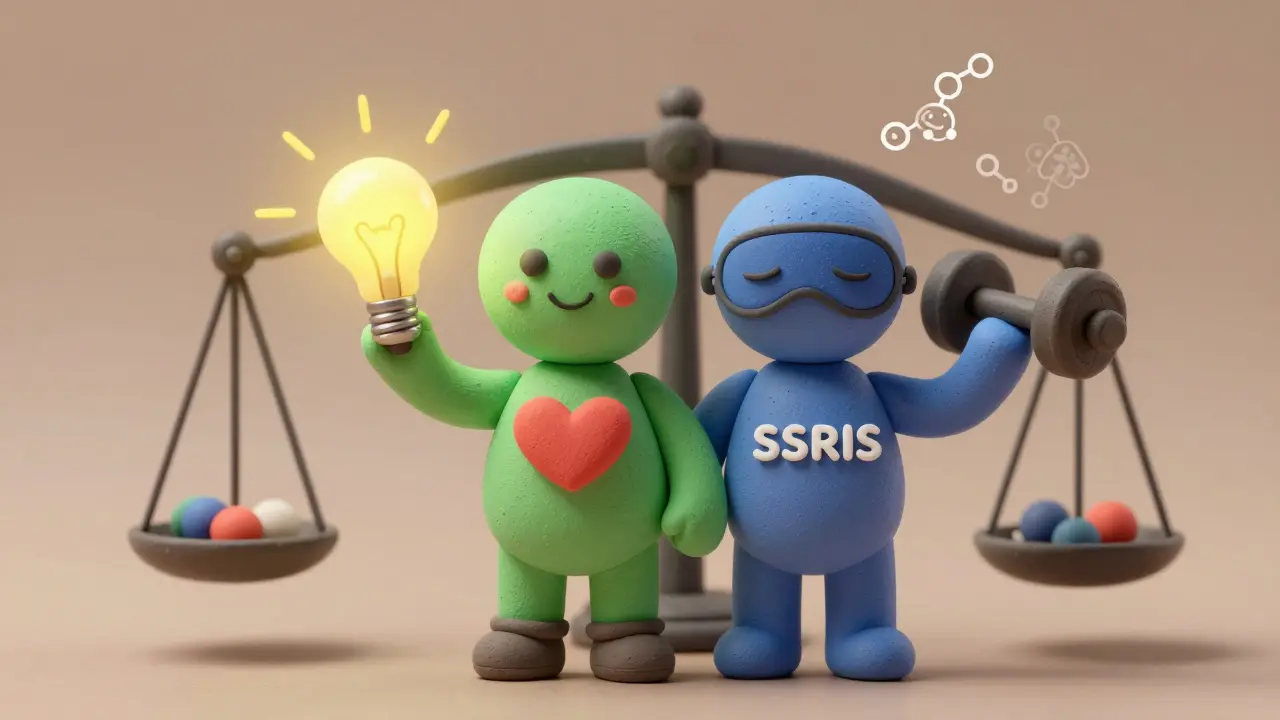
Bupropion vs SSRI Decision Tool
Find Your Best Antidepressant Match
Answer a few questions about your symptoms and health conditions to see if bupropion or an SSRI might be a better fit for you.
Your Recommendation
When choosing an antidepressant, the goal isn’t just to lift your mood-it’s to do it without wrecking your sex life, making you gain weight, or turning you into a zombie by noon. That’s where the difference between bupropion and SSRIs becomes more than just chemistry. It’s about your daily life.
How They Work (And Why It Matters)
Bupropion, sold as Wellbutrin or Zyban, doesn’t touch serotonin like SSRIs do. Instead, it boosts norepinephrine and dopamine-two brain chemicals tied to energy, focus, and motivation. That’s why people on bupropion often say they feel more awake, sharper, and even a little more driven.
SSRIs-like sertraline (Zoloft), escitalopram (Lexapro), and fluoxetine (Prozac)-work by increasing serotonin. Serotonin helps regulate mood, but it also controls appetite, sleep, and sexual function. That’s why, for many, the benefits come with unwanted trade-offs.
Sexual Side Effects: The Biggest Dealbreaker
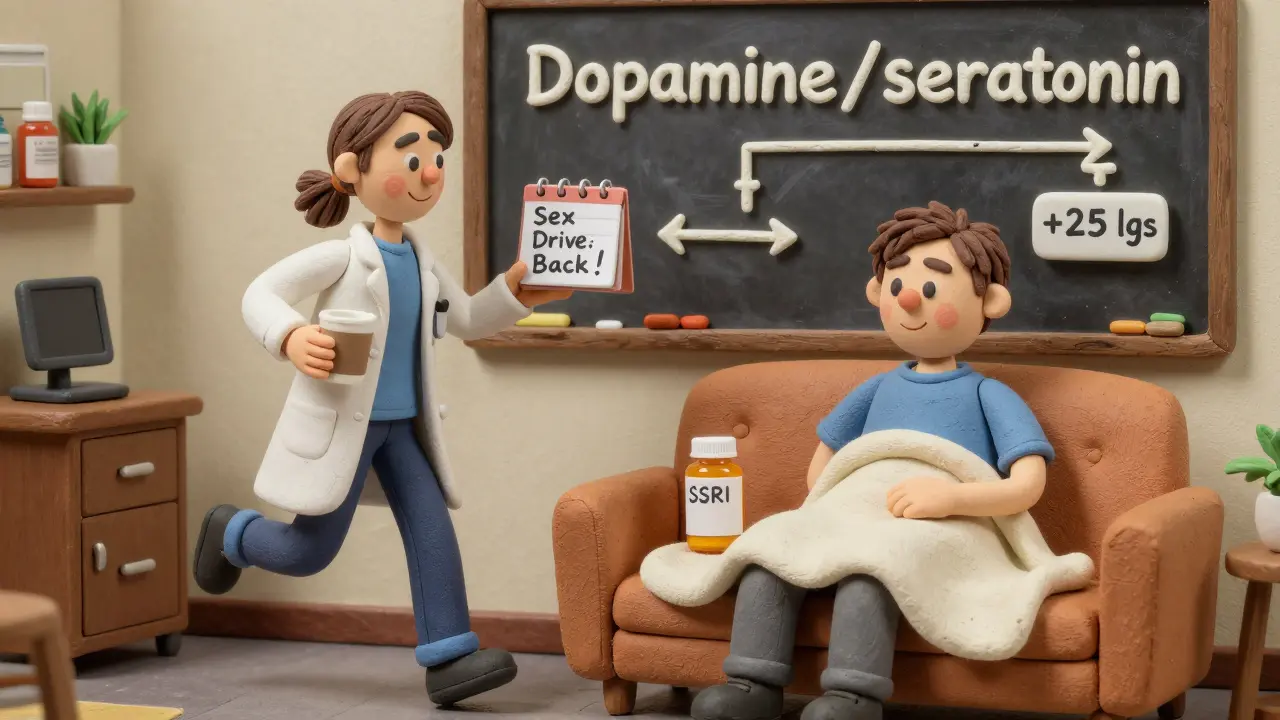
If you’ve ever taken an SSRI and noticed your libido vanished, you’re not alone. Studies show 30% to 70% of people on SSRIs experience sexual side effects. For paroxetine, it’s as high as 76%. That means trouble getting aroused, delayed or absent orgasms, or just plain losing interest in sex altogether.
Bupropion? The numbers flip. Only about 13% to 15% of users report sexual problems. One 2002 meta-analysis found people on bupropion were less than half as likely to have orgasmic issues compared to those on SSRIs. A 2015 study in the Journal of Sexual Medicine showed that two-thirds of people who switched from an SSRI to bupropion got their sex drive back within weeks.
Real talk from patients: On Drugs.com, 47% of negative SSRI reviews mention sexual side effects. One user wrote, “Lost all interest in sex after 6 months.” On the flip side, bupropion users say things like, “Finally feel like myself again-sex is back on the table.”
Weight Gain vs Weight Loss
SSRIs are notorious for weight gain. Over 6 to 12 months, people on paroxetine or sertraline typically gain 2.5 to 3.5 kilograms. It’s not just appetite-your metabolism slows down. A user on Drugs.com wrote, “Gained 25 pounds in one year. I didn’t change my diet.”
Bupropion does the opposite. Multiple studies show it leads to modest weight loss. In one 2009 trial, people taking 400 mg of bupropion XL lost an average of 7.2% of their body weight over 24 weeks. Even at standard antidepressant doses, most people lose 0.8 to 1.2 kg-or at least don’t gain any. For someone already stressed about body image, that’s huge.
Sleep and Energy: Awake vs Asleep
SSRIs often cause drowsiness. Fluoxetine can make you sluggish. Paroxetine? It’s a sedative in disguise. Many people take them at night just to sleep through the fog.
Bupropion is the opposite. It’s activating. It’s why it’s used as a smoking cessation aid-because it keeps you alert. A 2008 review found bupropion users were 73% less likely to feel sleepy than those on SSRIs. Patients report: “I used to nap after lunch. Now I’m working out at 6 a.m.”
But here’s the catch: that same energy can backfire. If you struggle with anxiety, bupropion can make it worse. A 2017 study found 28% of patients with anxiety disorders stopped bupropion because it made them jittery or overwhelmed. SSRIs, by contrast, often calm anxiety faster.
Seizure Risk: The Hidden Red Flag
Bupropion has one serious risk: seizures. At 300 mg per day, the risk is about 0.1%. At 400 mg, it jumps to 0.4%. That’s why doctors never prescribe it to people with a history of seizures, eating disorders, or those taking other medications that lower seizure threshold. Even people with severe alcohol withdrawal are warned off.
SSRIs? Almost no seizure risk-just 0.02% to 0.04%. That’s why they’re safer for older adults or people with neurological conditions.
Blood Pressure and Heart Health
Bupropion can raise systolic blood pressure by 3 to 5 mmHg on average. It’s not dangerous for most, but if you already have high blood pressure, you need to monitor it closely. Doctors recommend checking BP every 2 to 4 weeks when starting.
SSRIs are mostly neutral on blood pressure. Some, like fluoxetine, may even lower it slightly. For someone with heart disease or hypertension, that makes SSRIs the safer pick.
Switching Between Them
If you’re switching from an SSRI to bupropion, timing matters. Fluoxetine sticks around in your system for up to 6 days. You need a 2-week gap before starting bupropion to avoid serotonin syndrome-a rare but dangerous condition where your brain gets flooded with serotonin.
For other SSRIs like sertraline or escitalopram, a 1-week washout is enough. Always taper off SSRIs slowly. Stopping cold turkey can cause dizziness, nausea, or brain zaps.
Combining bupropion with an SSRI? It’s sometimes done to treat stubborn depression or reverse sexual side effects. But it increases seizure risk. One case report documented a seizure in a healthy person taking bupropion 300 mg with escitalopram 20 mg. It’s not common, but it’s real.
Who Should Choose What?
Choose bupropion if:
- You’re struggling with sexual side effects from SSRIs
- You’ve gained weight on other antidepressants
- You feel sluggish or tired during the day
- You don’t have anxiety, seizure history, or eating disorders
Choose an SSRI if:
- You have significant anxiety or panic attacks
- You have a history of seizures or epilepsy
- You have uncontrolled high blood pressure
- You’re older or have other health conditions
What Patients Really Say
Reddit threads and review sites tell the real story. On r/mentalhealth, a user named AnxietyWarrior87 wrote: “Switched from Lexapro to Wellbutrin-zero sex drive turned back on. Now I can’t sleep.” That’s the trade-off: better libido, worse insomnia.
On Drugs.com, bupropion has a 7.4/10 rating. 68% say it helped. Common praises: “No weight gain,” “I’m finally productive.” Negative reviews? “Severe anxiety,” “Ringing in my ears never stopped.”
SSRIs like Lexapro have a 6.8/10 rating. 47% of negative reviews mention sex drive loss. 38% mention weight gain. One user: “I feel better, but I hate who I’ve become.”
A 2021 patient survey found 63% preferred bupropion for fewer sexual side effects. But 71% of people with anxiety preferred SSRIs. Your symptoms matter more than the drug label.
What Doctors Say
Dr. Robert MacFadden called bupropion the “gold standard” for avoiding sexual side effects. Dr. Stephen Stahl praised its ability to keep patients alert and focused. But Dr. John Greden warned: “Don’t prescribe it to someone with a seizure history or an eating disorder.”
The American Psychiatric Association lists bupropion as a first-line option for patients with sexual dysfunction from SSRIs. But they also say it’s not ideal for those with high anxiety.
What’s New in 2026
There’s a new extended-release bupropion called Aplenzin that only needs one daily dose. Pharmacogenetic testing-checking your genes to predict how you’ll respond to antidepressants-is now being used in clinics. The 2023 GUIDED trial showed it improved remission rates by 14.2% compared to guessing.
The market is shifting. More people are asking: “Which drug fits my life?” Not just “Which drug works?” That’s why bupropion’s share of antidepressant prescriptions has held steady at around 10%-it’s the go-to for people who need to stay sharp, stay lean, and stay sexually active.
Final Thought: It’s Not About Being ‘Better’-It’s About Being Right For You
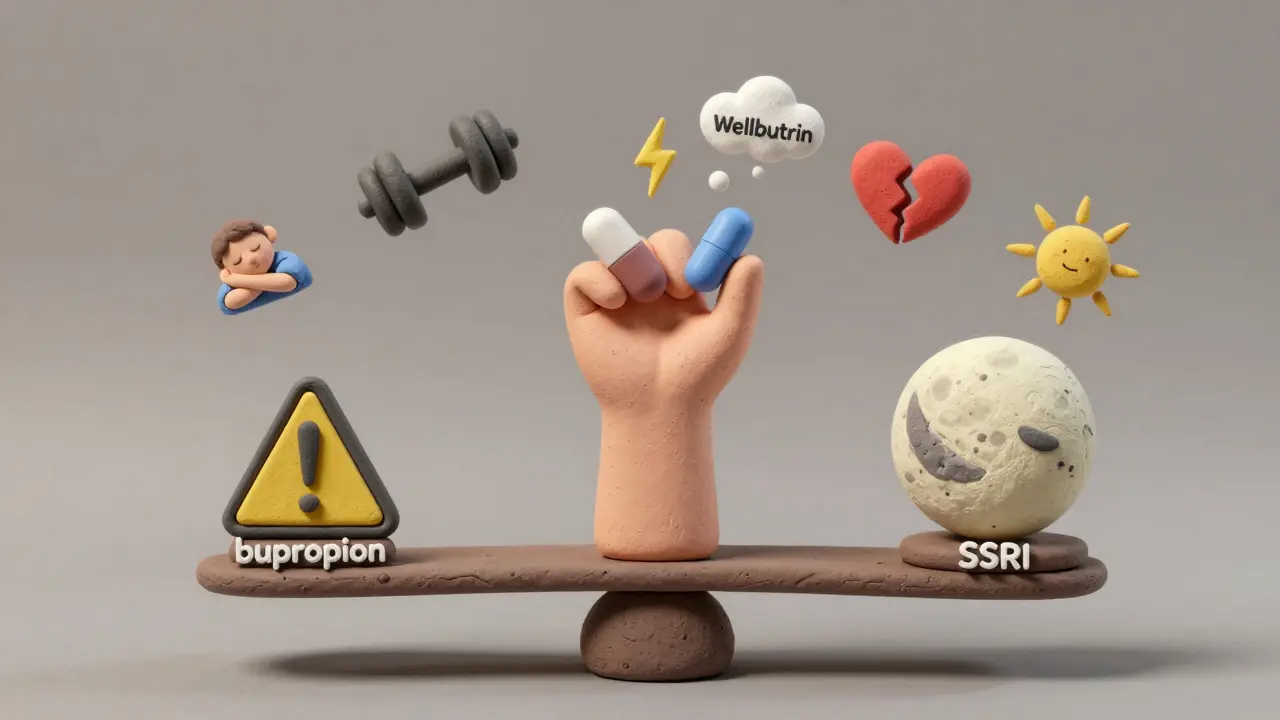
Bupropion isn’t the ‘best’ antidepressant. SSRIs aren’t ‘worse.’ They’re different tools. One helps you feel calm. The other helps you feel alive. The right choice depends on your body, your goals, and your life.
If you’re tired of losing your sex drive or gaining weight, bupropion might be your next step. If you’re anxious, overwhelmed, or have a seizure risk, SSRIs might be safer.
There’s no universal answer. But there is a better way: talk to your doctor about your priorities. Not just your symptoms. Your life. Your body. Your future.
Can bupropion help with SSRI-induced sexual dysfunction?
Yes. Studies show that switching from an SSRI to bupropion improves sexual function in about 67% of cases. Even adding bupropion to an ongoing SSRI (augmentation) helps 70-80% of patients in open-label trials. This is why it’s often the first choice when sexual side effects become unbearable.
Does bupropion cause weight gain?
No-most people lose a little weight on bupropion. On average, users lose 0.8 to 1.2 kg over 6 to 12 months. Higher doses (400 mg/day) can lead to 7% or more weight loss. This makes it one of the few antidepressants that doesn’t contribute to weight gain.
Why do SSRIs cause weight gain?
SSRIs increase serotonin, which affects appetite and metabolism. Over time, many people experience increased cravings for carbs and reduced energy expenditure. Studies show average weight gains of 2.5 to 3.5 kg over 6 to 12 months, especially with paroxetine and sertraline.
Is bupropion safe if I have high blood pressure?
Use with caution. Bupropion can raise systolic blood pressure by 3 to 5 mmHg. If you have uncontrolled hypertension, your doctor may prefer an SSRI. Monitor your BP every 2 to 4 weeks when starting bupropion. Avoid if your blood pressure is consistently above 140/90.
Can I take bupropion with an SSRI?
Yes, but only under close supervision. Combining them can help treat resistant depression or reverse sexual side effects. But it increases seizure risk and the chance of serotonin syndrome. Only do this if other options have failed, and always start low and go slow.
What’s the most common reason people stop bupropion?
Anxiety and insomnia. While bupropion helps people feel awake and alert, that same stimulation can cause restlessness, jitteriness, or trouble sleeping. About 28% of people with anxiety disorders discontinue it for this reason. If you’re prone to panic or overthinking, it might not be the right fit.
How long does it take for bupropion to start working?
Like most antidepressants, it takes 2 to 6 weeks for full effect. But many people notice increased energy and focus within the first week. Sexual side effects from previous SSRIs often improve faster-sometimes within 2 to 3 weeks after switching.
Is bupropion addictive?
No. Bupropion is not addictive and doesn’t cause physical dependence. However, stopping suddenly can cause headaches, irritability, or mood swings. Always taper off under medical supervision, even though it’s not a controlled substance.
Menu