
Antidepressant Risk & Monitoring Checker
Enter patient details to see risk assessment and recommended monitoring steps.
Key Takeaways from the Article
- Age Matters: The highest statistical risk of increased suicidality is in children, adolescents, and young adults (up to age 24). For adults over 25, treatment often reduces overall suicide risk.
- Activation vs. Causation: Early improvements in energy before mood stabilization can lead to "activation," where patients feel capable of acting on existing negative thoughts.
- Monitoring is Key: Frequent check-ins (weekly/bi-weekly initially) are crucial during the first few months of treatment.
- The Paradox: Fear of the warning has led to reduced treatment rates, which may have contributed to an increase in youth suicides due to untreated depression.
You pick up a prescription for an antidepressant. The pharmacist hands you a leaflet, and there it is: a stark, bolded block of text at the top. It warns that this medication might increase your risk of suicidal thoughts or behaviors. For many patients, especially parents of teenagers starting SSRIs like Prozac or Zoloft, this message stops them cold in their tracks. Does taking medicine to feel better actually make things worse? This fear is rooted in the FDA Black Box Warning, the most serious safety alert the U.S. Food and Drug Administration can issue.
But here’s the twist: the warning was issued to save lives, yet years of data suggest it may have inadvertently led to fewer people seeking help, potentially causing more harm than good. If you or someone you love is navigating this decision, understanding what the warning actually says-and what it doesn’t-is crucial. It’s not about stopping treatment out of fear; it’s about knowing exactly what to watch for during those critical first weeks.
What Exactly Is the Black Box Warning?
The Black Box Warning gets its name from the literal black box border surrounding the text in the drug’s package insert. Introduced by the FDA in October 2004, it signals that a medication carries a risk of serious or life-threatening adverse effects. In the context of antidepressants, the warning specifically highlights an increased risk of suicidality-defined as suicidal thinking and behavior-in children, adolescents, and young adults (up to age 24) during the initial phases of treatment.
It is vital to understand what triggered this alert. The FDA didn’t just guess. They analyzed data from 24 short-term clinical trials involving over 4,400 patients. The analysis showed that while the absolute risk was small, it was statistically significant: roughly 4% of young people taking antidepressants experienced suicidal events compared to 2% of those taking a placebo. Importantly, no actual suicides occurred in these specific trials, but the emergence of new or worsening symptoms was enough to warrant the highest level of caution.
In May 2006, the FDA expanded this warning. Originally focused on children and teens, it was broadened to include young adults up to age 24. This expansion covered all classes of antidepressants, including SSRIs, SNRIs, and others, acknowledging that the biological mechanisms affecting mood regulation are similar across these drug families.
Who Is Actually at Risk?
A common misconception is that antidepressants cause suicide in everyone who takes them. That’s not what the data says. The risk is primarily concentrated in three specific age groups:
- Children (ages 6-12): Limited data exists, but caution is advised.
- Adolescents (ages 13-17): This group showed the clearest statistical link between medication use and increased suicidal ideation in early trials.
- Young Adults (ages 18-24): Added in 2006, this group faces a transitional period where brain development continues, and mental health crises often peak.
For adults over 25, the evidence does not show an increased risk of suicidality. In fact, for older adults, treating depression effectively often reduces suicide risk because severe depression itself is a major driver of suicidal behavior. The warning also makes exceptions for certain medications approved for specific conditions, such as fluoxetine (Prozac) for Major Depressive Disorder (MDD) and OCD, which have extensive safety data supporting their use in pediatric populations.
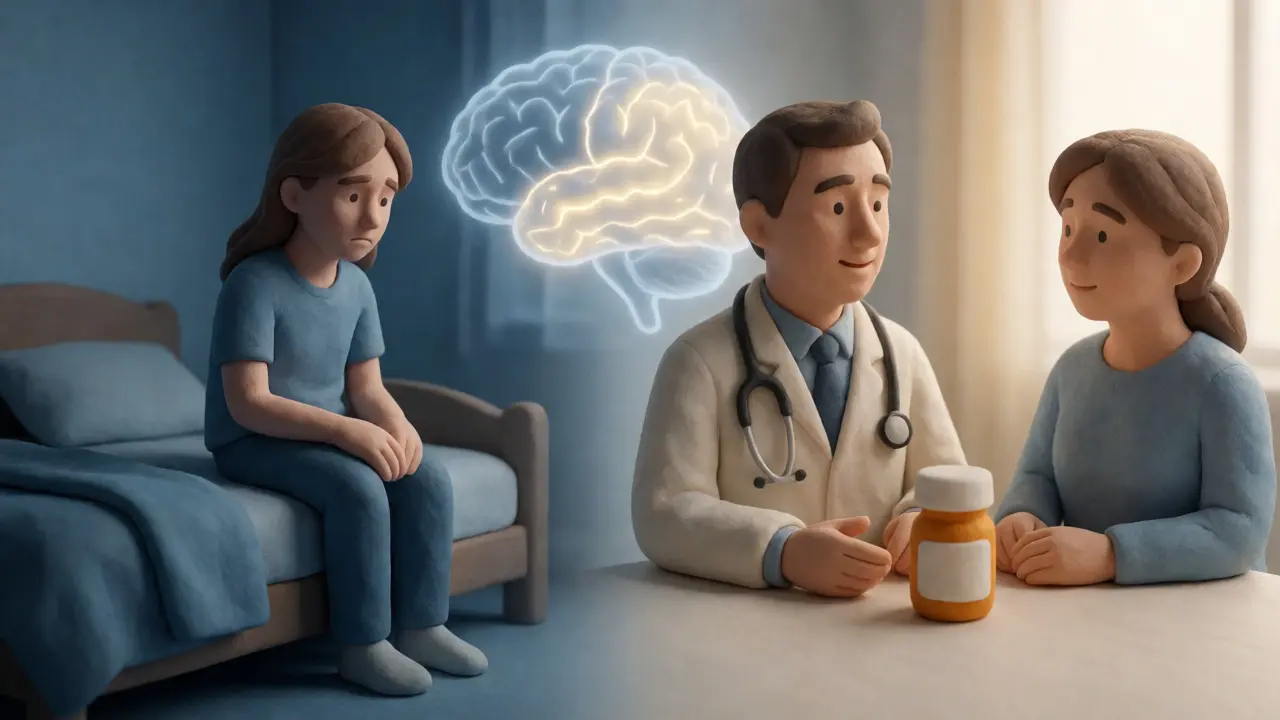
The Paradox: Did the Warning Do More Harm Than Good?
This is where the story gets complicated. While the intention was to protect vulnerable patients, researchers began noticing unintended consequences shortly after the warning’s implementation. A comprehensive study published in Health Affairs in 2023 analyzed over fifteen years of data and found that the warning coincided with significant drops in depression care.
| Metric | Change Observed | Implication |
|---|---|---|
| Physician Visits for Depression | -14.5% | Fewer diagnoses due to provider hesitation. |
| Depression Diagnoses | -19.7% | Patients went untreated or undiagnosed. |
| Antidepressant Prescriptions | -22.3% | Significant drop in pharmacological treatment. |
| Psychotherapy Visits | -17.1% | Non-drug treatments also declined. |
| Psychotropic Drug Poisonings | +28.6% | Substitution with more dangerous self-harm methods. |
| Suicide Deaths Among Youth | +14.9% | Potential net negative outcome despite safer meds. |
The logic behind these declines seems counterintuitive but understandable. Doctors became hesitant to prescribe. Parents became hesitant to accept prescriptions. Patients stopped going to therapy because they feared being labeled or medicated. Consequently, many individuals with moderate-to-severe depression remained untreated. Since untreated depression carries a high baseline risk of suicide, leaving it unaddressed may have been more dangerous than the small statistical increase in ideation caused by the medication.
Understanding "Activation" vs. Causation
Clinicians often refer to a phenomenon called "activation." When you start an antidepressant, particularly an SSRI, your energy levels may improve before your mood stabilizes. You might feel motivated enough to act on negative thoughts that previously felt too heavy to execute. This isn’t necessarily the drug creating new suicidal desires; it may be removing the physical lethargy that prevented action.
This distinction matters. The FDA warning is about suicidality (thoughts and behaviors), not necessarily completed suicide. Most adverse events reported were non-lethal attempts or worsening ideation. The American Psychiatric Association emphasizes that for most patients, the benefits of treating depression outweigh these risks, provided there is close monitoring.

Practical Steps for Safe Treatment
If you are starting an antidepressant, don’t let the warning paralyze you. Instead, use it as a roadmap for vigilance. Here is how to navigate the first few months safely:
- Schedule Frequent Check-ins: Your doctor should see you within 1-2 weeks of starting medication, then monthly for the first three months. These aren’t just pill refills; they are safety checks.
- Keep a Mood Journal: Track your sleep, appetite, and mood daily. Look for sudden shifts, agitation, or restlessness (akathisia), which can be precursors to distress.
- Educate Your Support System: Tell family or friends you are starting treatment. Ask them to watch for changes in your behavior, speech, or withdrawal. Sometimes, we miss our own red flags.
- Know the Emergency Plan: Have a crisis plan ready. If suicidal thoughts intensify, do not wait for the next appointment. Call your provider, go to the ER, or dial 988 (in the US) immediately.
Remember, the goal is remission of depression. Stopping medication abruptly because of fear can lead to withdrawal symptoms and a relapse of depressive symptoms, which can be equally destabilizing. Always taper off under medical supervision if you decide to stop.
The Global Perspective and Future Outlook
The United States is unique in its use of the boxed warning format. The European Medicines Agency (EMA) uses a different approach, focusing on routine warnings in product labeling rather than a boxed alert. This difference reflects varying regulatory philosophies on risk communication. Recent discussions among experts suggest moving away from a class-wide warning toward medication-specific warnings. For instance, some studies indicate that paroxetine may carry a higher risk profile in youth compared to other SSRIs, while bupropion shows minimal association with suicidality.
As of 2026, the FDA maintains the warning but has refined the language to emphasize monitoring rather than prohibition. The scientific consensus is shifting toward personalized medicine: assessing individual risk factors-such as family history of bipolar disorder or previous trauma-rather than applying a blanket rule to every young person prescribed an antidepressant.
Do antidepressants cause suicide in adults over 25?
No, current evidence does not support an increased risk of suicidality in adults over 25. In fact, effective treatment of depression generally lowers the overall risk of suicide in this demographic by alleviating the underlying condition.
What should I do if I have suicidal thoughts when starting medication?
Contact your healthcare provider immediately. Do not stop the medication abruptly without advice, as this can cause withdrawal effects. Seek emergency help if the thoughts become urgent or if you feel unable to stay safe.
Does the Black Box Warning apply to all antidepressants?
Yes, the warning applies to all antidepressant medications, including SSRIs, SNRIs, TCAs, and MAOIs. However, the specific risk profile can vary by drug and indication, so discuss your specific medication with your doctor.
Why did the FDA expand the warning to include young adults?
In 2006, the FDA extended the age range to 24 because data suggested that the biological vulnerability to medication-induced activation and the peak incidence of mental health disorders overlap in this age group, making them susceptible to similar risks as adolescents.
Can therapy replace antidepressants to avoid this risk?
Therapy is highly effective and carries no risk of medication-induced suicidality. For mild-to-moderate depression, guidelines often recommend therapy as a first-line treatment. However, for severe depression, the combination of therapy and medication is often more effective than either alone.
Menu