

Imagine your heart is a pump that’s losing its strength. It can’t push blood through your body as efficiently as it used to. This is heart failure, and while the name sounds scary, it’s a manageable condition for millions of people today. The secret weapon in this fight isn’t just one pill-it’s a specific combination of drugs working together to protect your heart, lower your blood pressure, and keep fluid from building up in your lungs and legs.
If you or a loved one has been diagnosed with heart failure, you’ve probably heard terms like ACE inhibitors, ARNIs, beta-blockers, and diuretics thrown around during doctor visits. These aren’t just random prescriptions; they are the pillars of modern heart care. Understanding what each does, why they are prescribed, and how they interact can help you take control of your treatment plan.
The Foundation: ACE Inhibitors and ARBs
To understand these drugs, you first need to know about the renin-angiotensin-aldosterone system (RAAS). Think of RAAS as your body’s internal alarm system for low blood flow. When your heart isn’t pumping well, your kidneys release hormones that tighten your blood vessels and make your body hold onto salt and water. This raises blood pressure, which makes your weak heart work even harder. It’s a vicious cycle.
ACE inhibitors are medications that block the enzyme responsible for creating angiotensin II, a hormone that tightens blood vessels. Common examples include enalapril, lisinopril, and ramipril. By stopping this hormone, ACE inhibitors relax your blood vessels, making it easier for your heart to pump. They have been the standard of care for decades because they significantly reduce the risk of death and hospitalization.
However, about 5% to 20% of patients develop a persistent dry cough from ACE inhibitors. If that happens, doctors often switch you to an Angiotensin Receptor Blocker (ARB is a drug that blocks the action of angiotensin II at the receptor level rather than preventing its formation). Drugs like valsartan or losartan offer similar benefits without the cough, though they don’t provide the same mortality benefit as the newer generation of drugs discussed next.
The Game Changer: ARNI (Sacubitril/Valsartan)
In recent years, a new class of medication has taken center stage: the Angiotensin Receptor-Neprilysin Inhibitor, or ARNI is a combination drug that blocks harmful angiotensin receptors while boosting beneficial natriuretic peptides. The most common brand is Entresto (sacubitril/valsartan).
Why is this different? While ACE inhibitors and ARBs only block the bad stuff (angiotensin), ARNIs do two things. First, they block angiotensin like an ARB. Second, they inhibit neprilysin, an enzyme that breaks down natural peptides in your body that help remove sodium and water and relax blood vessels. It’s like turning off the brake and pressing the gas pedal at the same time.
Clinical trials, specifically the PARADIGM-HF study involving over 8,000 patients, showed that ARNIs reduced cardiovascular death and heart failure hospitalizations by 20% compared to traditional ACE inhibitors. Because of this, current guidelines recommend starting with an ARNI whenever possible, unless cost or kidney function is a barrier. One critical rule: you must wait 36 hours after taking an ACE inhibitor before starting an ARNI to avoid a rare but serious swelling of the throat called angioedema.

Slowing the Heart Down: Beta-Blockers
Your heart might be failing, but it’s likely beating too fast. A racing heart uses more oxygen and doesn’t fill completely with blood between beats, which reduces efficiency. Beta-blockers are medications that slow down the heart rate and reduce the force of contraction.
Not all beta-blockers are created equal for heart failure. Only three have been proven to save lives in clinical trials: carvedilol, metoprolol succinate (extended-release), and bisoprolol. You won’t see atenolol or propranolol recommended for this purpose.
These drugs protect the heart from adrenaline surges. Over time, they can actually reverse some of the damage, helping the heart muscle recover some strength. However, they come with side effects. Fatigue is very common when you start, as is dizziness or a slower heart rate. Doctors usually start with a tiny dose-like half a tablet-and slowly increase it every few weeks until you reach the target dose. Don’t stop them abruptly, as this can cause a dangerous rebound effect.
Managing Fluid: Diuretics
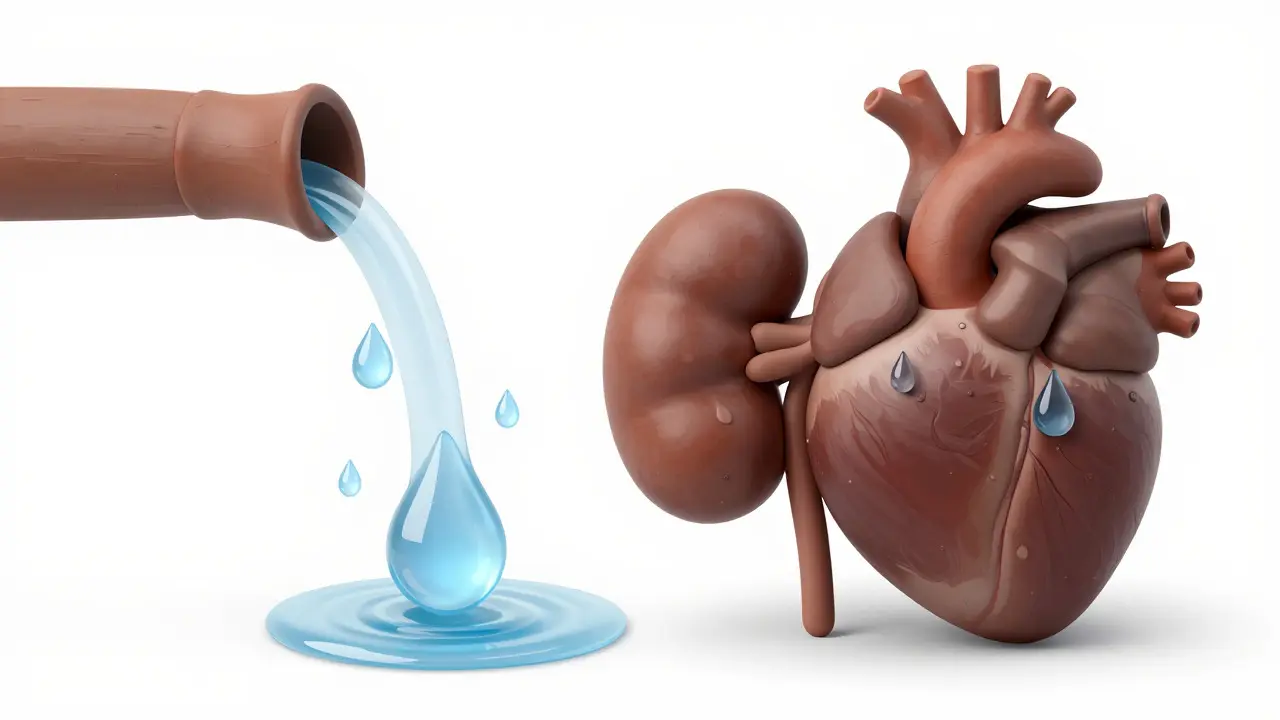
If you’ve ever woken up gasping for air or noticed your ankles swelling up by the end of the day, you’re dealing with fluid overload. Your kidneys aren’t getting enough blood flow to filter out excess water, so it builds up in your tissues. This is where Diuretics are drugs that help your kidneys remove excess salt and water from your body through urine come in.
Loop diuretics like furosemide (Lasix) or torsemide are the heavy lifters here. They don’t necessarily extend your life directly, but they dramatically improve your quality of life by reducing shortness of breath and swelling. Without them, other heart medications might not work because the physical strain of fluid overload overwhelms the heart.
A lesser-known but crucial player is spironolactone. While it acts as a mild diuretic, its main job is blocking aldosterone, a hormone that causes scarring in the heart muscle. Studies show spironolactone can reduce mortality by 30% in severe heart failure cases. The trade-off? It holds onto potassium, so regular blood tests are essential to ensure levels don’t get too high.
The Quadruple Therapy Standard
Modern heart failure treatment isn’t about picking one drug. It’s about combining four pillars:
- An ARNI (or ACE inhibitor if ARNI isn’t tolerated)
- A Beta-blocker
- An MRA (like spironolactone)
- An SGLT2 inhibitor (a newer diabetes drug that also protects the heart)
Diuretics are added on top of this foundation if you still have fluid symptoms. This "quadruple therapy" approach has been shown to reduce hospitalizations by over 20% compared to older methods. The key is titration-starting low and going slow. Your doctor will adjust doses based on your blood pressure, kidney function, and how you feel.
| Drug Class | Primary Function | Common Examples | Key Side Effects |
|---|---|---|---|
| ACE Inhibitors | Relaxes blood vessels, reduces workload | Lisinopril, Enalapril | Dry cough, high potassium |
| ARNI | Blocks angiotensin, boosts protective peptides | Sacubitril/Valsartan | Dizziness, low blood pressure |
| Beta-Blockers | Slows heart rate, protects muscle | Carvedilol, Metoprolol Succinate | Fatigue, slow pulse |
| Diuretics | Removes excess fluid | Furosemide, Spironolactone | Frequent urination, electrolyte imbalance |
Living with Heart Failure Medications
Starting these medications can feel overwhelming. You might experience dizziness when standing up, especially in the first few weeks. This is usually due to lowered blood pressure, which is actually a good sign that the drugs are working to reduce strain on your heart. Stay hydrated, rise slowly from chairs, and wear compression stockings if recommended.
Monitoring is non-negotiable. Weigh yourself every morning after using the bathroom but before eating. A sudden gain of 2-3 pounds in a day or 5 pounds in a week signals fluid retention. Call your doctor immediately. Also, watch for signs of high potassium, such as muscle weakness or irregular heartbeat, especially if you’re on ACE inhibitors, ARNIs, or spironolactone.
Cost can be a barrier. Generic ACE inhibitors and beta-blockers are inexpensive. ARNIs, however, can be costly. If insurance coverage is an issue, talk to your pharmacist or doctor about patient assistance programs. Never skip doses or stop meds because of cost without consulting your care team; there are often solutions available.
Can I switch from an ACE inhibitor to an ARNI?
Yes, and it is often recommended. However, you must stop the ACE inhibitor for at least 36 hours before starting the ARNI to prevent a rare but serious allergic reaction called angioedema. Your doctor will guide you through this transition safely.
Why do I feel tired on beta-blockers?
Fatigue is a common side effect when starting beta-blockers because your heart rate is slowing down. This usually improves within a few weeks as your body adjusts. If fatigue persists or worsens, consult your doctor, as the dose may need adjustment.
Do diuretics cure heart failure?
No, diuretics manage symptoms by removing excess fluid, but they do not reverse heart damage or extend life on their own. They are essential for comfort and preventing hospitalizations, but they work best when combined with disease-modifying drugs like ARNIs and beta-blockers.
What should I eat while on these medications?
Limit sodium intake to less than 2,000 mg per day to prevent fluid buildup. If you are on potassium-sparing diuretics or ACE inhibitors, monitor your potassium intake. Avoid excessive potassium-rich foods if your blood levels are high, but maintain a balanced diet unless your doctor advises otherwise.
How long does it take for these medications to work?
Diuretics work within hours to reduce swelling. ACE inhibitors and ARNIs begin protecting your heart immediately, but full benefits on blood pressure and remodeling take weeks. Beta-blockers require gradual titration over months to reach effective doses. Patience is key, as the long-term benefits outweigh initial side effects.
Menu